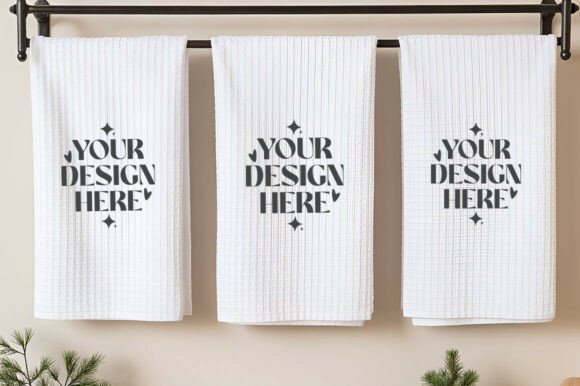
Christmas Kitchen Towel Mockup 17 Review
As someone who has spent years reviewing graphics and testing them on actual fabric, I approach every new download with a mix of excitement and skepticism. When I first laid eyes on Christmas Kitchen Towel Mockup 17, it wasn't just another pretty picture; it felt like a potential cornerstone for a holiday collection. The immediate impression is one of rustic charm mixed with modern clarity. It doesn't scream for attention with neon colors or chaotic layouts. Instead, it whispers warmth, suggesting a cozy kitchen filled with the scent of cinnamon and fresh-baked cookies.
This isn't a design meant to be shoved onto a generic black t-shirt and forgotten. The visual personality of Christmas Kitchen Towel Mockup 17 suggests a homey, artisanal vibe that fits perfectly into the current market for handmade goods. Whether you are an Etsy seller looking to refresh your shop or a boutique owner preparing seasonal inventory, this mockup offers a realistic preview of how a finished product will feel in a customer's hands. It bridges the gap between digital files and tangible reality, which is exactly what a good product mockups package should do.
From Screen to Stitch: A Real-World Scenario
Let's imagine a real-life scenario where I decided to use this design for a custom order. I was working on a holiday gift package for a client who runs a small bakery. She wanted embroidered aprons and matching tea towels to hand out to her loyal customers. The challenge was finding a design that looked professional but retained that "handmade" touch that people crave these days.
I pulled up Christmas Kitchen Towel Mockup 17 as my starting point. Visually, the layout was balanced. It didn't look cramped, which is a common issue with many machine embroidery designs that try to cram too much detail into a small space. In my mind's eye, I could already see the texture of the linen towel beneath the stitches. The mockup helped me visualize how the stitch density would interact with the weave of the fabric. If the design were too dense, it might make the towel stiff, ruining its drape. Fortunately, the preview suggested a healthy balance of satin stitch for outlines and fill stitch for the main elements, ensuring the final piece would remain soft and flexible.
The result? The client loved the presentation. The mockup allowed us to show the design on a white towel before we even cut the thread. It built trust immediately because they could see exactly what they were getting. This is the power of using high-quality embroidery file previews. It turns a vague idea into a concrete plan, reducing the risk of costly mistakes during production.
Where This Design Shines
Christmas Kitchen Towel Mockup 17 is versatile, but it truly excels in specific applications. Its rustic aesthetic makes it a natural fit for holiday-themed projects. Here is where I believe it performs best:
- Kitchen Textiles: As the title suggests, this is the primary use case. It works beautifully on cotton tea towels, flour sacks, and dishtowels. The design scale seems optimized for the standard dimensions of these items.
- Holiday Gifts: Personalized gifts are huge right now. This design translates well to baby onesies, nursery decor, or festive pillow covers. The theme is universally appealing without being overly specific to one brand.
- Small Business Merchandise: For craft fair vendors or online shops, this serves as an excellent printable mockup for listing photos. It elevates the perceived value of the item, making a simple towel look like a premium handmade product.
- Apparel Accents: While designed for towels, the motif could work on the pocket of a sweatshirt or the cuff of a winter sweater, adding a subtle touch of seasonal flair to custom apparel.
Areas Requiring Caution
However, no single design is a magic bullet. As an experienced designer, I have learned that context is everything. There are situations where Christmas Kitchen Towel Mockup 17 might not be the best choice, or at least requires careful adjustment.
First, consider the hoop size. If you are working with a small hoop, such as those used for hats or delicate jewelry, you must ensure the design scales down without losing critical details. Tiny lettering or intricate corners can disappear when reduced, leading to a muddy appearance. Always test the design in your software to check the minimum viable size.
Secondly, fabric texture plays a massive role. While this design looks great on smooth cotton, applying it to highly textured fabrics like heavy waffle weave or thick fleece can cause the stitches to sink or become uneven. On stretchy fabrics, you need to be extra vigilant with stabilizer usage to prevent puckering. If you attempt this on dark fabric, the thread color contrast becomes paramount. You may need to adjust the thread colors in your digitizing software to ensure the design pops against the background.
Finally, avoid using this design on products that require frequent, aggressive washing, such as industrial dishcloths or children's play clothes, unless you verify the durability of the stitch types. Dense areas of running stitch or thin lines might wear down faster than robust fill patterns.
Practical Designer Notes for Success
Before you commit to a full production run, follow these practical steps to ensure your finished product meets your standards:
- Test on Scrap Fabric: Never go straight to the final item. Run the design on a scrap piece of the same material to check tension and registration.
- Review Stitch Density: Look closely at the embroidery project file. Are there any areas where the machine might skip stitches due to overcrowding? Adjust the density if necessary.
- Check Black and White Mockups: Sometimes color distracts from structural issues. View the design in grayscale to ensure the composition holds up without relying on hue.
- Confirm Licensing: If you plan to sell the finished items or distribute the digital file, double-check the license terms. Some design assets are for personal use only, while others allow commercial sales.
- Inspect Small Details: Zoom in on the digital preview. Are the corners sharp? Is the text legible? If the original file is low resolution, the embroidery might come out jagged.
In conclusion, Christmas Kitchen Towel Mockup 17 is more than just a static image; it is a tool for creative problem-solving. It helps designers visualize the end goal, anticipate potential pitfalls, and present their work with confidence. For anyone looking to create meaningful holiday embroidery or expand their craft business offerings, this mockup provides a solid foundation. Just remember to respect the limitations of the medium, choose your materials wisely, and always prioritize the quality of the stitch over the speed of production.
Whether you are creating a unique embroidered patch, a custom tote bag design, or a heartfelt personalized gift, taking the time to evaluate a design like this ensures that your final output reflects the care and skill you put into every project. It is the difference between a mass-produced item and a true labor of love.